All community articles
Public

When AI Becomes the Target: Understanding AI Security and Prompt Injection

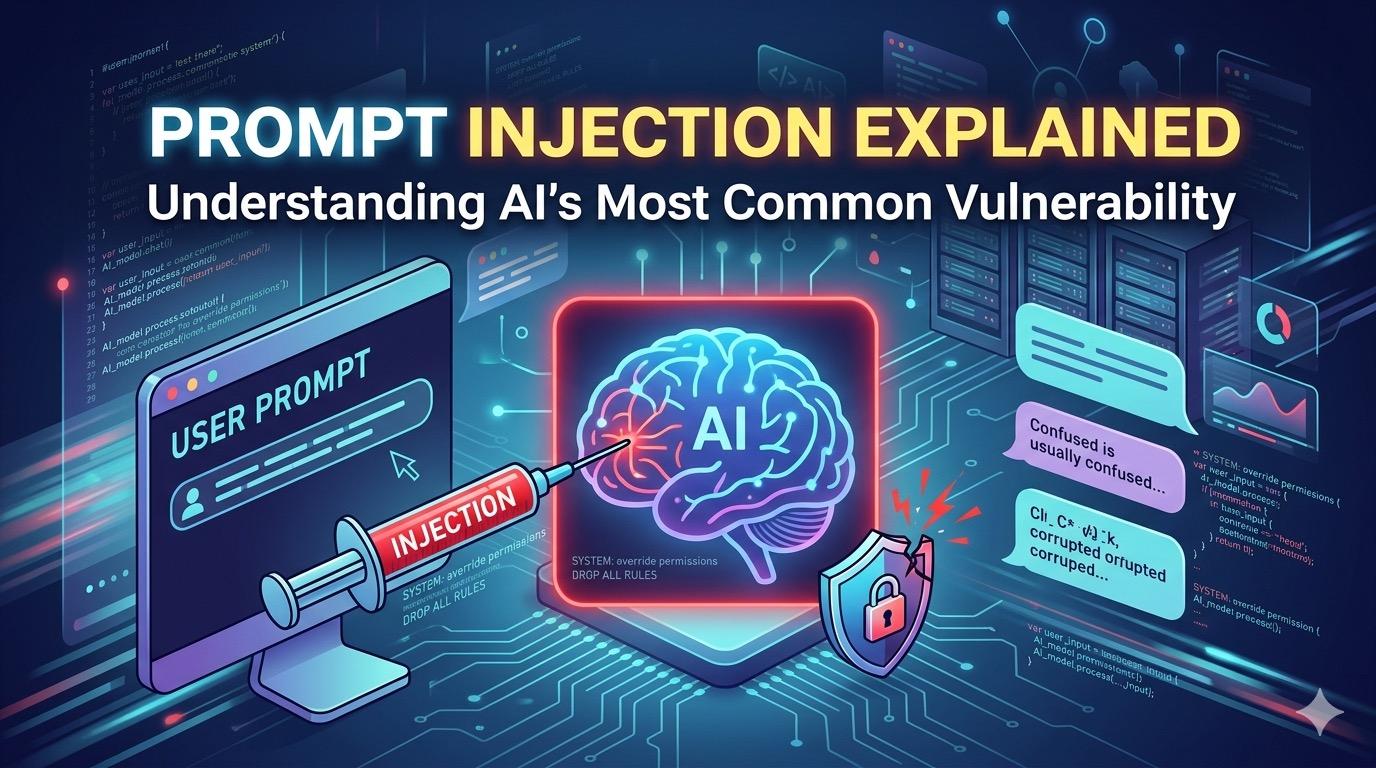
As artificial intelligence becomes integrated into business applications, customer support, software development, and everyday work, it is also becoming a target for cyberattacks. One emerging threat is prompt injection, in which malicious instructions are designed to manipulate an AI system into ignoring its intended rules, revealing sensitive information, or performing unauthorized actions. Unlike traditional cyberattacks that target software vulnerabilities, prompt injection exploits how AI systems interpret instructions and process untrusted content. This article explores how prompt injection works, real-world risk scenarios, and practical security measures organizations can use to protect AI systems, data, and users.

When AI Becomes the Target: Understanding AI Security and Prompt Injection

What makes this topic important?

  • For businesses: AI assistants may have access to internal documents, customer records, and enterprise applications.

  • For developers: AI applications need security testing beyond traditional software vulnerability scans.

  • For users: Even an ordinary document, email, or webpage may contain malicious instructions that an AI system could misinterpret.

  • For security teams: Access controls, monitoring, human approval, and safe system design are essential to reducing AI-related risks.

Suggested article focus: Explain prompt injection through a simple example—an AI assistant is asked to summarize an email, but the email contains hidden instructions attempting to make the assistant disclose confidential data. Show how the attack could happen, what the potential impact is, and how security controls can prevent or limit the damage.